USCIS I-485 Processing Time
Form I-485, Application to Register Permanent Residence or Adjust Status, is used to apply for a Green Card from within the United States. It is commonly filed by immediate relatives of U.S. citizens, family-preference applicants, and employment-based beneficiaries who are already in the country.
Processing times for Form I-485 vary significantly depending on the applicant's eligibility category and local USCIS field office. Immediate relatives of U.S. citizens often experience shorter processing times, while other family-based and employment-based categories may take considerably longer.
To help applicants stay informed, Track My Visa provides free case tracking and backlog insights for I-485 applications. By joining our platform, you can follow your case progress, explore real-world processing patterns, and better understand where your application stands — all at no cost. Basic tracking and insights are free forever as part of our commitment to supporting I-485 applicants.
What does the current case backlog look like?
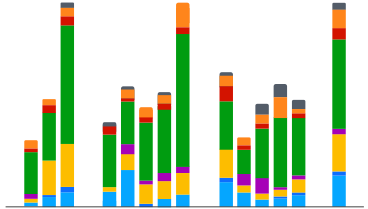
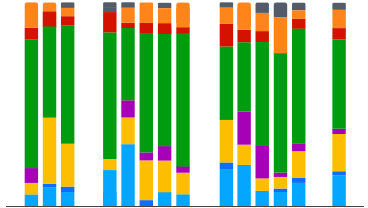
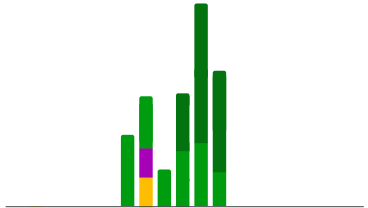
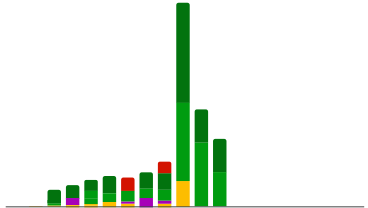
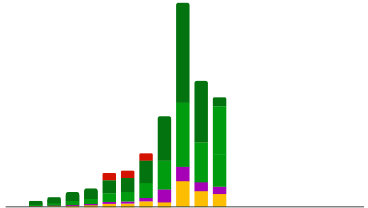
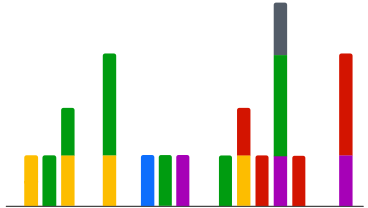
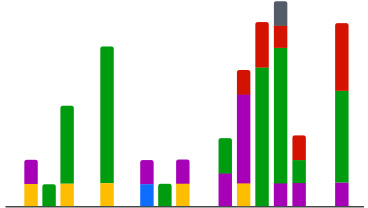
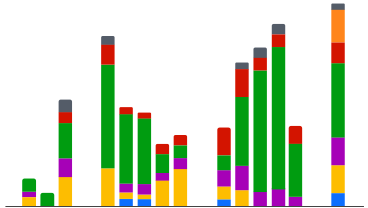
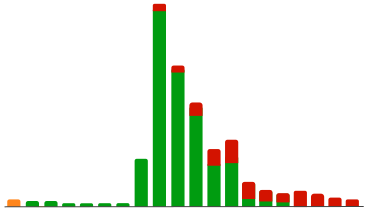
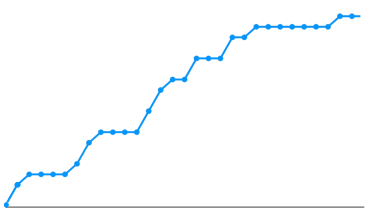
This graph shows the current status of I-485 applications being tracked on Track My Visa. The backlog chart illustrates where I-485 applications stand based on the month they were filed.
Unlike many other immigration petitions, the adjustment-of-status process includes in-person milestones, such as a biometrics appointment at a local Application Support Center (ASC) and, for many family-based applicants, an interview at a USCIS field office. These steps can introduce additional variability in overall processing times.
Newer applications on the right side of the graph are typically in the Case Received status and waiting for a biometrics appointment to be scheduled. As USCIS works through its workload, cases generally progress through Biometrics and Interviews before ultimately being Approved or Denied. Some cases may also receive a Request for Evidence (RFE) during the process.
Once a case is approved, USCIS produces and mails a physical Green Card to the applicant. This final stage is shown as Card Issued.
We are actively growing our I-485 community. The more applicants who join, the more accurately the chart reflects real-world processing patterns.